40% off · Free delivery to Iraq in 3 days · Extra 5% off online
Harvest offer · Limited stock

40% offthis harvest

Extra virgin olive oil from Jordan’s ancient Roman olive trees, in one 4.5 L tin.

  • Roman olive treesSome believed 2,000+ years old
  • Cold extractedKept below 27 °C
  • Rain-fed (Ba'li)No irrigation
  • Extra virginFirst grade, max 0.8% acidity
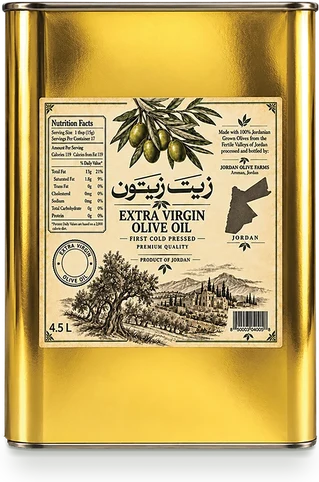
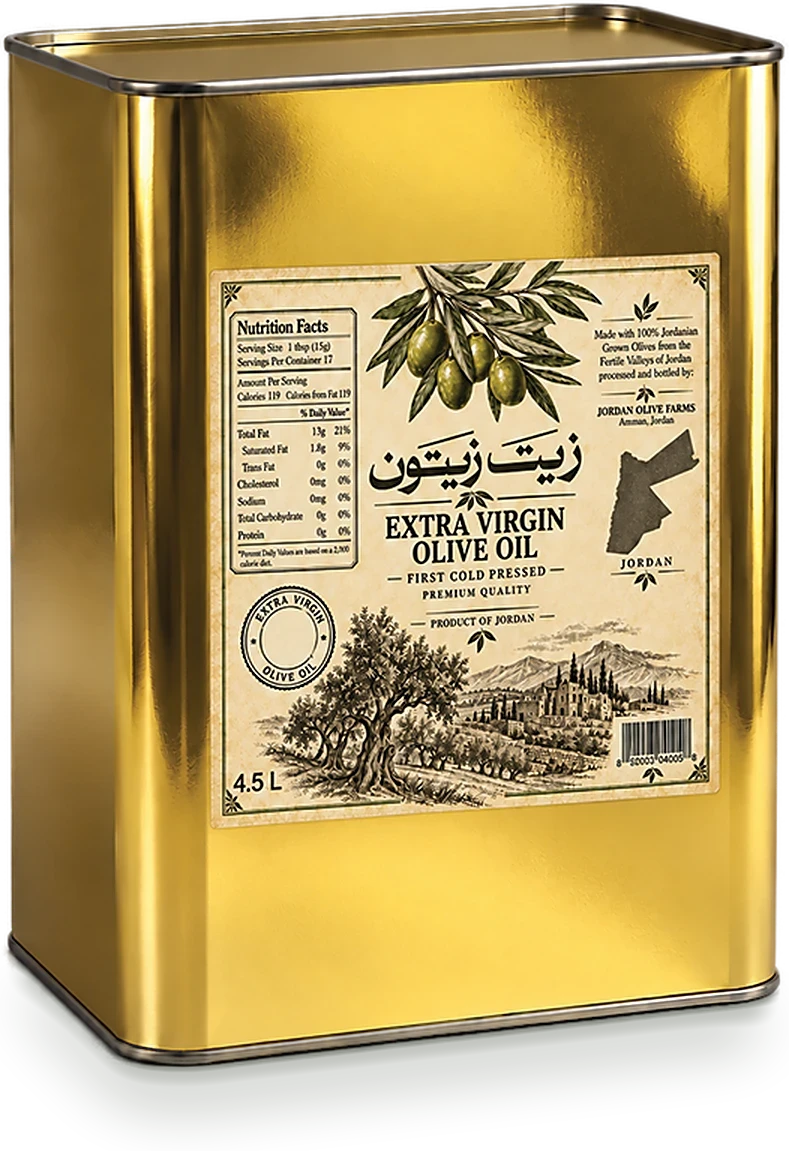
The gold 4.5‑liter tin of Zayt Zaytoun extra virgin olive oil, seen at an angle.
⁦⁦304,000⁩ IQD⁩⁦⁦182,000⁩ IQD⁩

Pay online by card: ⁦⁦172,900⁩ IQD⁩43% off in total

4.5 liters · ⁦⁦38,422⁩ IQD⁩ per liter when you pay online

Free delivery to your doorFrom Jordan to Iraq in 3 days

Small, rain-fed harvests mean limited stock each season.
  • 40% off the regular price
  • Pay online: extra 5% off
  • Every order confirmed by phone
  • Free delivery in 3 days

One olive oil. One 4.5‑liter tin. From the rain‑fed groves of Jordan.

Jordanian Organic Extra Virgin Olive Oil

⁦⁦182,000⁩ IQD⁩⁦⁦304,000⁩ IQD⁩Save 40%

⁦⁦40,444⁩ IQD⁩ per liter

You save ⁦⁦122,000⁩ IQD⁩ on every tin

⁦⁦172,900⁩ IQD⁩ with Visa or Mastercard, an extra 5% off

A first-grade extra virgin olive oil from distinguished Jordanian groves, where ancient Roman olive trees grow on rainfall, not irrigation. One generous 4.5‑liter tin for the family table, or to give.

Size
4.5 liters
Origin
Jordan
Cultivation
Rain-fed (Ba'li)
Type
Extra virgin

Quantity

1

We acceptVisaMastercard

  • Pay online by Visa or Mastercard for an extra 5% off.
  • Free door-to-door delivery from Jordan to Iraq in 3 days.
  • No account needed to order.
  • Sending it as a gift? Add a message at checkout.
Description

From Jordan’s enduring olive-growing traditions comes an oil shaped by the land, the seasons, and generations of agricultural knowledge. The olives come from distinguished Jordanian groves with ancient Roman olive trees, grown the Ba'li way: rain-fed and non-irrigated.

Product details
Product
Jordanian organic extra virgin olive oil
Grade
Extra virgin, first grade
Origin
Produced in Jordan
Cultivation
Rain-fed (Ba'li), non-irrigated
Groves
Distinguished Jordanian groves with ancient Roman olive trees
Packaging
One 4.5‑liter tin
Storage and serving

Keep the tin tightly closed in a cool, dark place, away from the stove. For everyday use, pour some into a glass jug or bottle and refill it from the tin as you go.

Delivery and payment

Delivery is free. Your tin ships from Jordan and arrives at your door in Iraq in 3 days. We call to confirm before dispatch. Pay by Visa or Mastercard for an extra 5% off, or pay cash on delivery.

Read the shipping and returns policy

Ordering takes a minute

No account needed. Pay online by card and save an extra 5% on top of the offer.

  1. Place your order

    Your name, mobile number and address. No account needed.

  2. Pay online, save 5% more

    Pay by Visa or Mastercard for an extra 5% off. Prefer cash? You can pay on delivery.

  3. Free delivery in 3 days

    We call to confirm, then ship from Jordan to your door in Iraq, free, in 3 days.

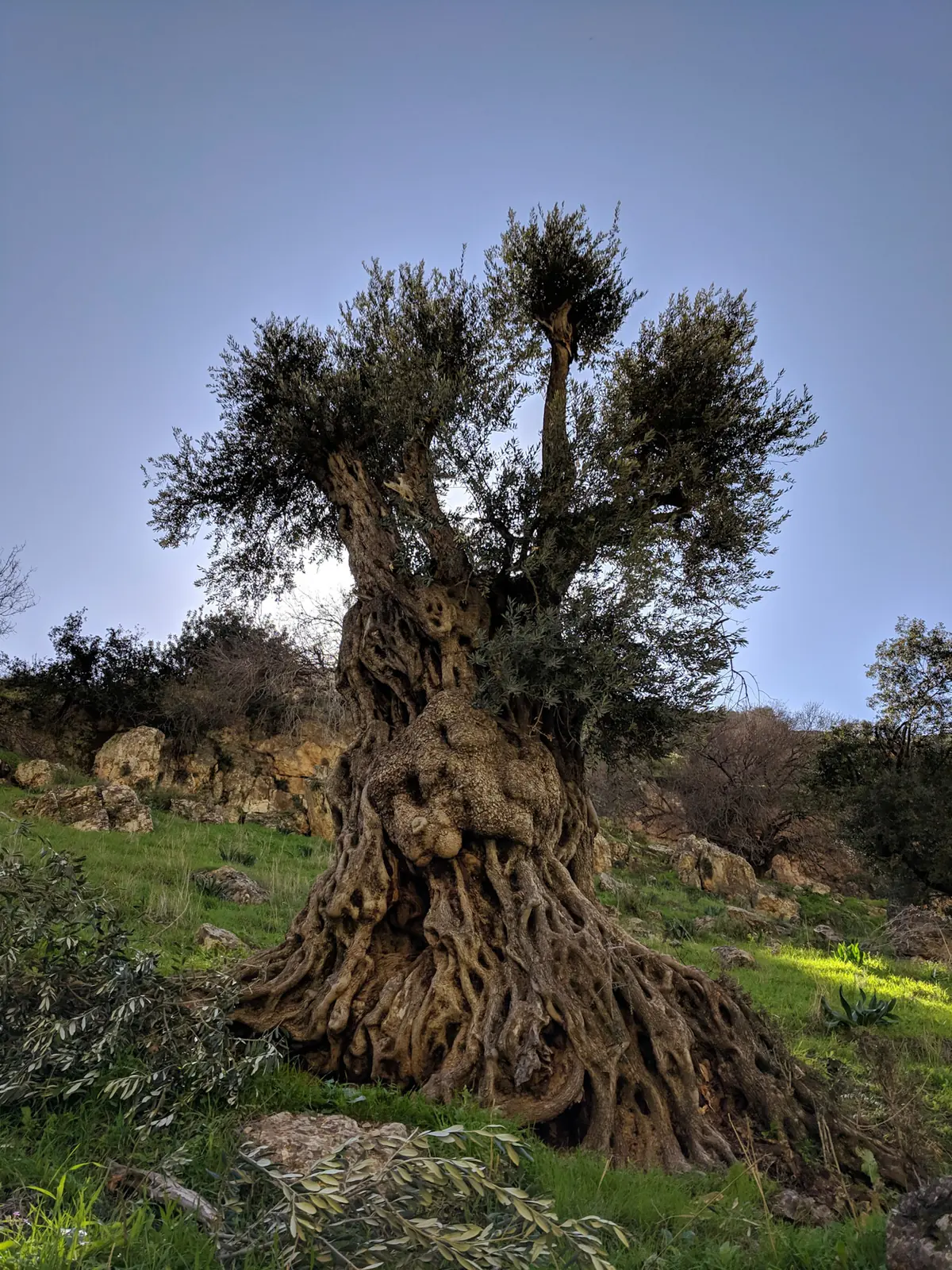
An ancient olive tree with a massive, twisted trunk on a rocky green hillside.
Our story

Some Stories Take Centuries to Grow.

From Jordan’s enduring olive-growing traditions comes an oil shaped by the land, the seasons, and generations of agricultural knowledge.

Olives have grown on this land since antiquity. Some Jordanian groves still keep trees from the Roman era, their trunks twisted and hollowed by centuries of wind and harvest. Our oil is sourced from distinguished groves where trees like these still stand.
Produced in Jordan

Every tin comes from Jordanian groves and is produced in Jordan.

Rain-fed (Ba'li)

The trees drink winter rain instead of routine irrigation, the traditional Ba'li way.

Roman olive trees

Sourced from distinguished groves where olive trees from the Roman era still stand.

First-grade extra virgin

A premium, first-grade extra virgin olive oil, selected with care.

The Roman olive

Why Roman olive oil is rare.

In Jordan, the oldest olive trees are known as Roman olives. Some are believed to be more than 2,000 years old, dating back to Roman rule, and they still bear fruit. Our oil comes from distinguished groves where these trees still stand.

  • More than 2,000 years old

    Some of Jordan’s Roman olive trees are believed to date back to Roman rule, and they are still harvested today.

  • An ancient lineage

    Jordan’s National Agricultural Research Center counts these trees among the oldest olive genotypes in the Mediterranean.

  • Rarer every year

    Many old trees have been lost to urban sprawl, firewood cutting and uprooting for gardens. Jordan now protects them by law.

  • Small, rain-fed harvests

    These trees live on winter rain alone. Their harvests are small and vary from year to year, so their oil is always limited.

Roman olive treesYoung irrigated orchards
AgeCenturies, some over 2,000 yearsYears to decades
WaterWinter rain only (Ba'li)Regular irrigation
HarvestSmall, varies each yearLarge and steady
StatusProtected by Jordanian lawOrdinary farmland
Roman olive trees compared with young irrigated orchards

The Roman olive in numbers

  • 2,000+years: the age some of Jordan’s Roman olive trees are believed to have reached
  • ~2 macross: the trunk of the oldest trees
  • 400–1,500 mabove sea level, in the western highlands where they grow
  • Mid-Novhand harvest begins, after the first winter rains

A year in a rain-fed grove

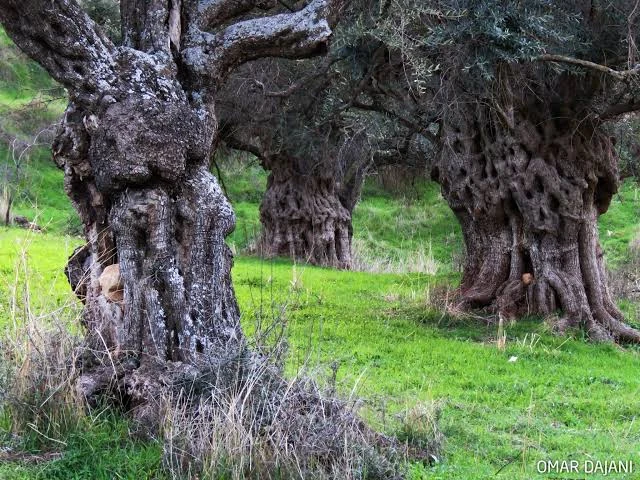
  1. Ancient olive trees with hollowed trunks standing in green winter grass.
    WinterRain soaks into the ground.Photo: Omar Dajani
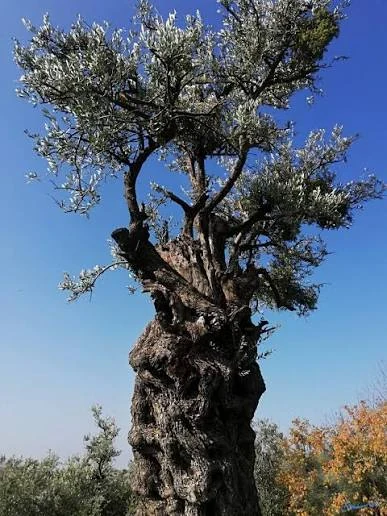
  2. A tall old olive tree reaching into a clear blue sky.
    Spring and summerThe trees draw on what the soil holds.
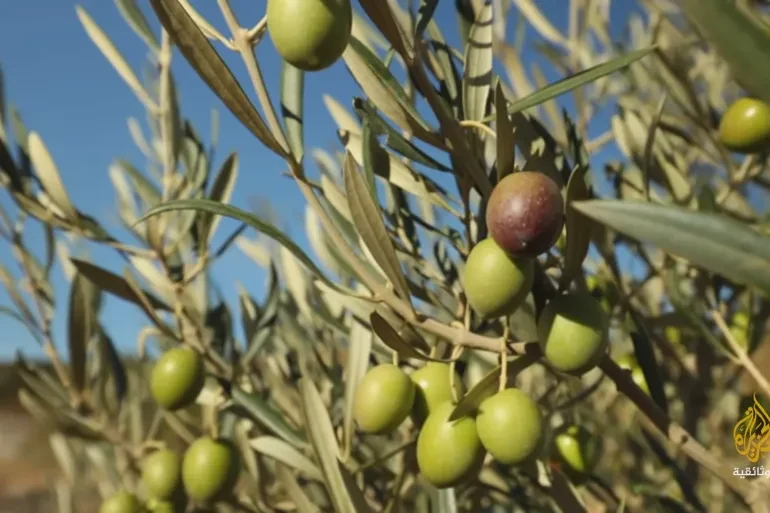
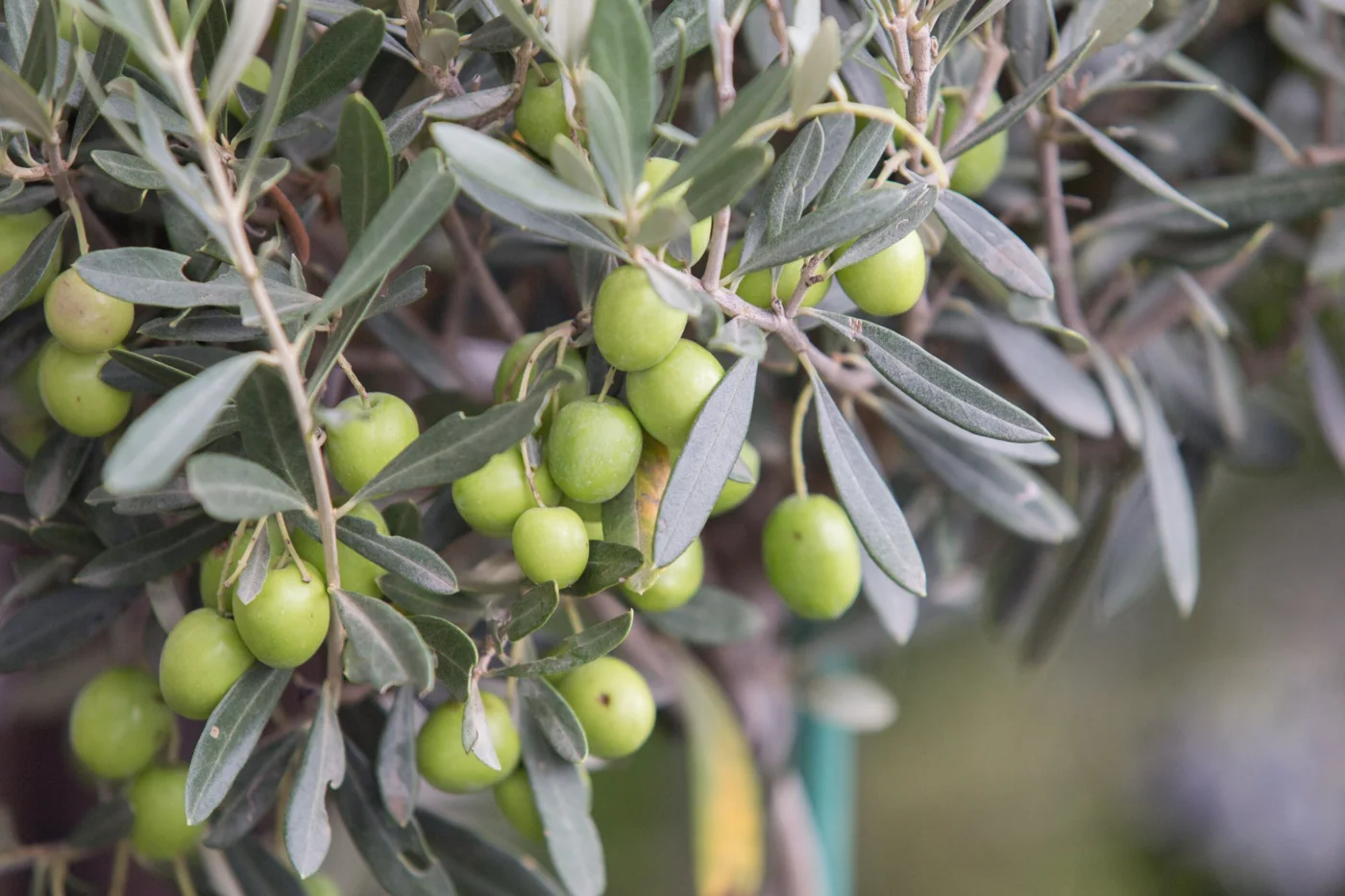
  3. Green olives ripening on the branch, one already turning dark.
    AutumnThe olives are harvested.Image: Al Jazeera Documentary
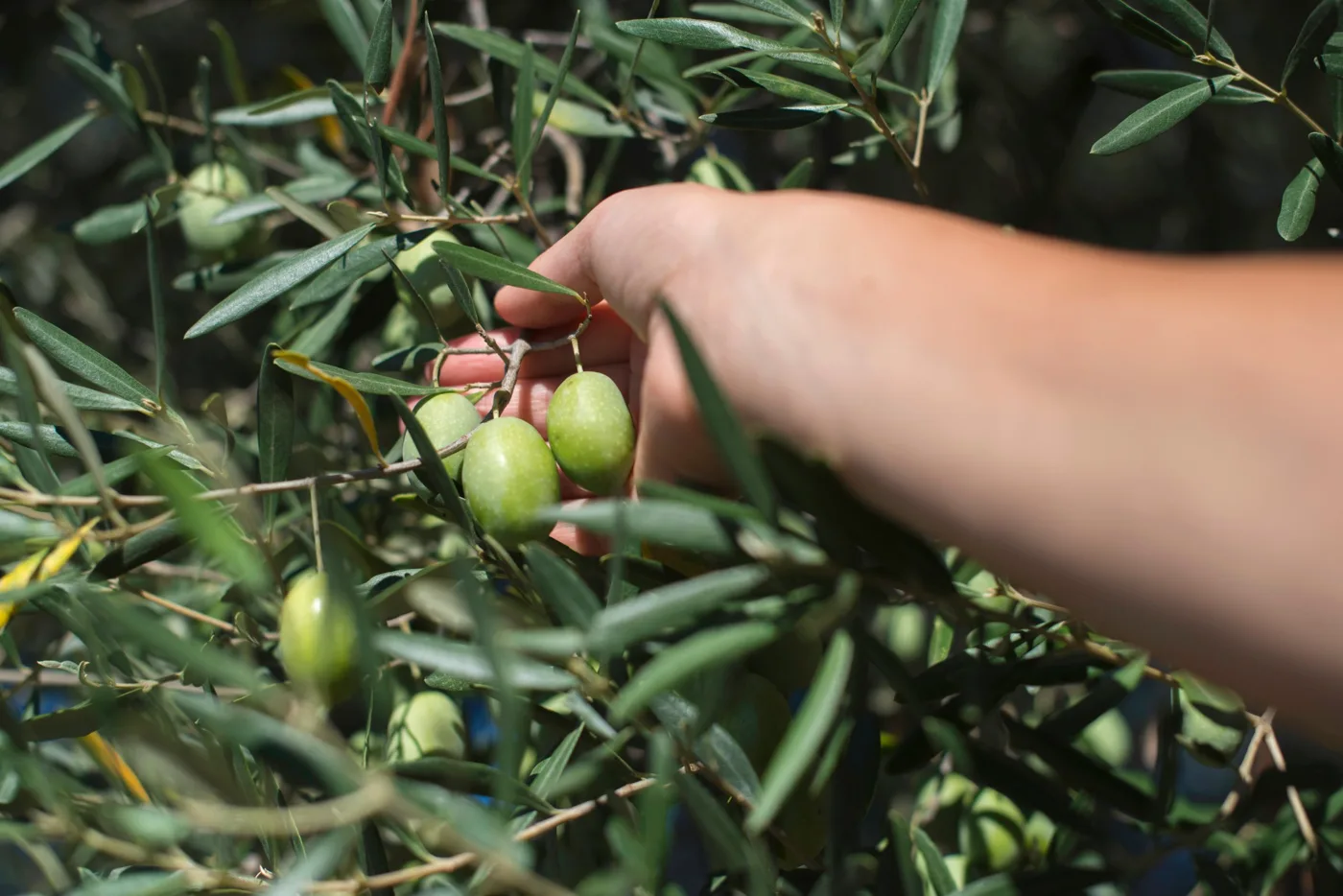
A hand picking green olives from the branch of an olive tree.A hand holding a branch heavy with green and ripening olives.
Picked from the branch
The harvest

Picked by hand. Sorted by hand.

An olive starts to lose quality the moment its skin breaks. So the fruit is picked by hand, straight from the branch, and sorted by hand before it goes to the mill.

Picked by hand

  • No bruising. Fruit that is beaten or shaken down splits, and damaged fruit starts to oxidise and ferment.
  • Picked when ready. The hand harvest starts in mid‑November, after the first winter rains.
  • Gentle on ancient trees. No beating of branches that have stood for centuries.

Sorted by hand

  • Bruised, overripe and fallen fruit is set aside.
  • Leaves, twigs and grit are taken out.
  • Only sound, fresh olives go to the mill.

Why it matters: damaged fruit raises acidity and leaves defects in the flavour. Those are exactly the tests an oil must pass to be called extra virgin.

Cold extraction

Why “cold” is the word that matters

Extra virgin olive oil is the juice of the olive. It may be made only by mechanical means, under conditions, especially temperatures, that do not change the oil. Keeping the olive paste cool is what protects its aroma and its natural polyphenols.

Olive paste temperature during extraction

Below 27 °C: fresh aromas and natural polyphenols are kept.

Hotter: more oil comes out, but aromas fade and polyphenols break down.

27 °C is the limit for “cold extraction” and “first cold pressing” under EU olive oil rules.In a 2021 study, olive paste mixed at 20 °C kept more total phenols than paste mixed at 25 °C or 30 °C.
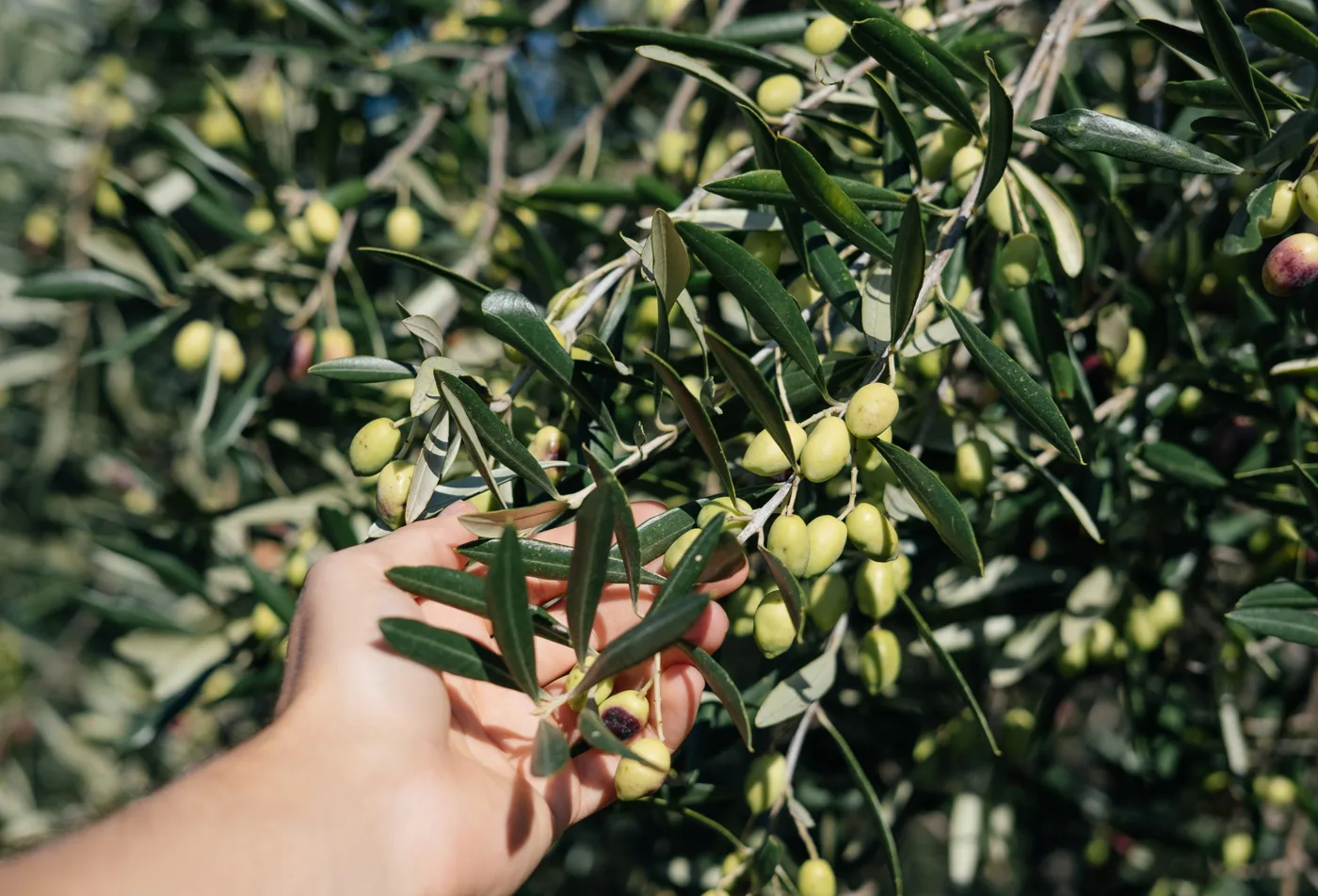
Harvest time in an olive grove

From olive to tin

  1. Picked and sorted by hand

    Picked from the branch, sorted, and taken to the mill while fresh.

  2. Crushed to a paste

    Crushers break the fruit and pit into a smooth paste.

  3. Mixed slowly, kept cool

    The paste is stirred so tiny drops of oil join up, below 27 °C.

  4. Oil separated

    A press or centrifuge separates oil from water and pulp. No heat, no solvents.

  5. Rested and sealed

    The oil settles, then goes into a sealed tin that keeps out light.

What “extra virgin” has to mean

  • ≤ 0.8%free acidity at most, the international limit for extra virgin (0.8 g per 100 g).
  • NoneNo heat treatment, no refining and no chemical solvents. Mechanical extraction only.
  • PanelA tasting panel must find it fruity and free of defects.

How to taste it

  • FruityFresh grass, green leaf or ripe fruit on the nose.
  • BitterA clean bitterness on the tongue, a sign of fresh polyphenols.
  • PepperyA catch at the back of the throat. A small cough is a good sign.

Sources: International Olive Council definitions; EU marketing rules for olive oil (Regulation 29/2012); Slow Food Ark of Taste on the Rumi olive; a 2021 study on malaxation temperature published in Foods.

At the table

An Everyday Ritual, Elevated.

Bread torn at the table, a shallow dish of oil, olives, and whatever the season brings. The tin stays in the kitchen; a small jug carries the oil to the table.

  • With warm bread and za'atar
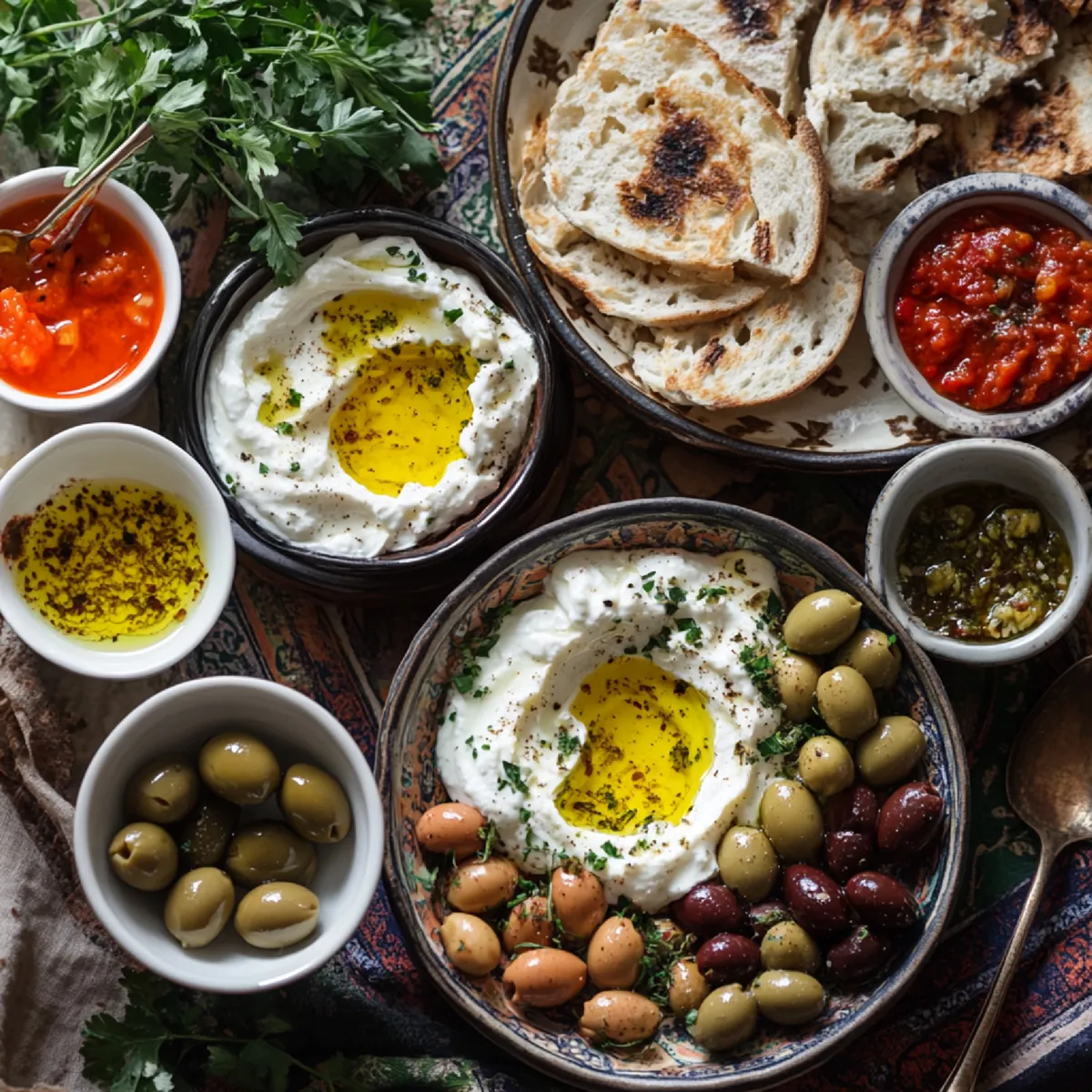
  • Over hummus, labneh and mutabbal
  • Across salads and roasted vegetables
  • In everyday cooking
Shop the 4.5L Tin
In the kitchen

One oil for the whole kitchen

Extra virgin olive oil is not only for drizzling. It holds up to everyday heat, so one tin covers the salad, the stew and the frying pan.

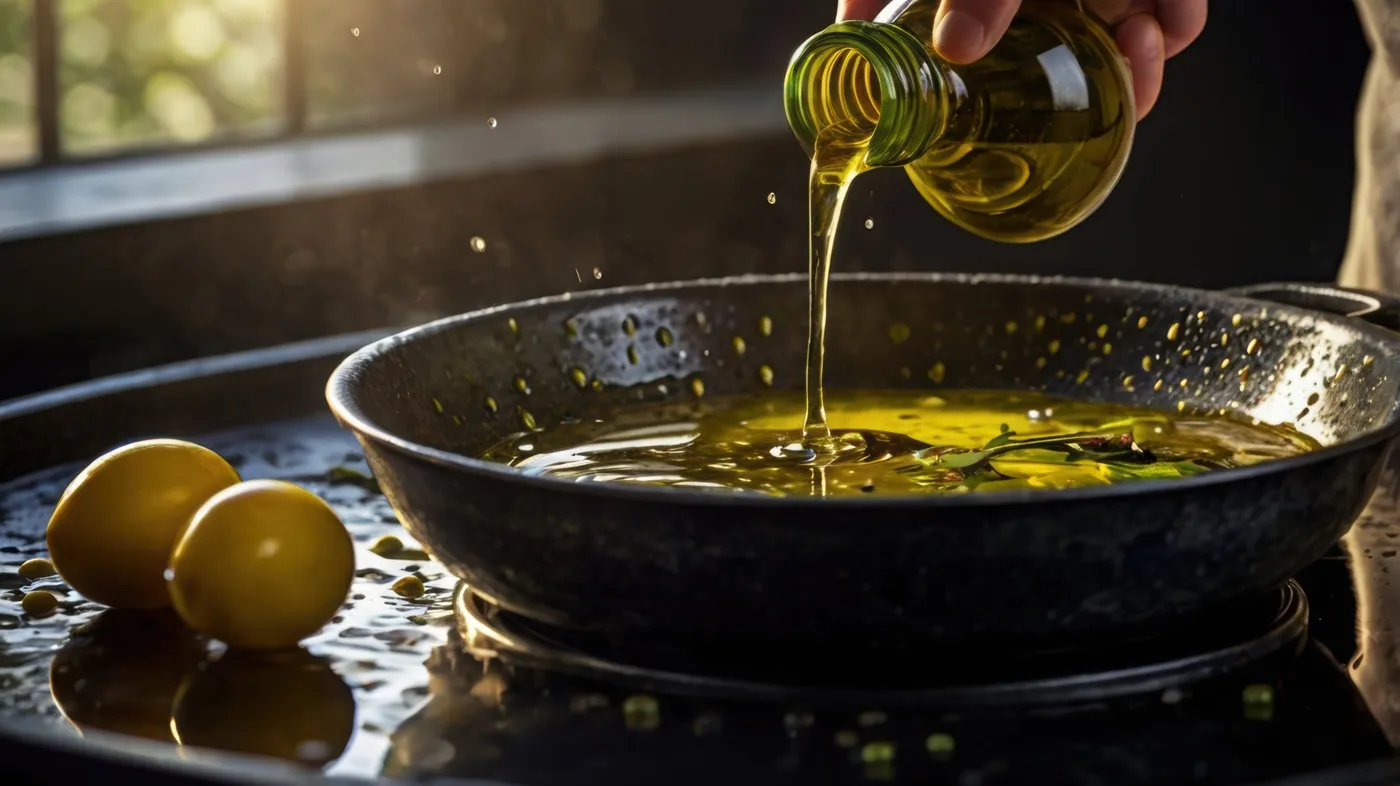
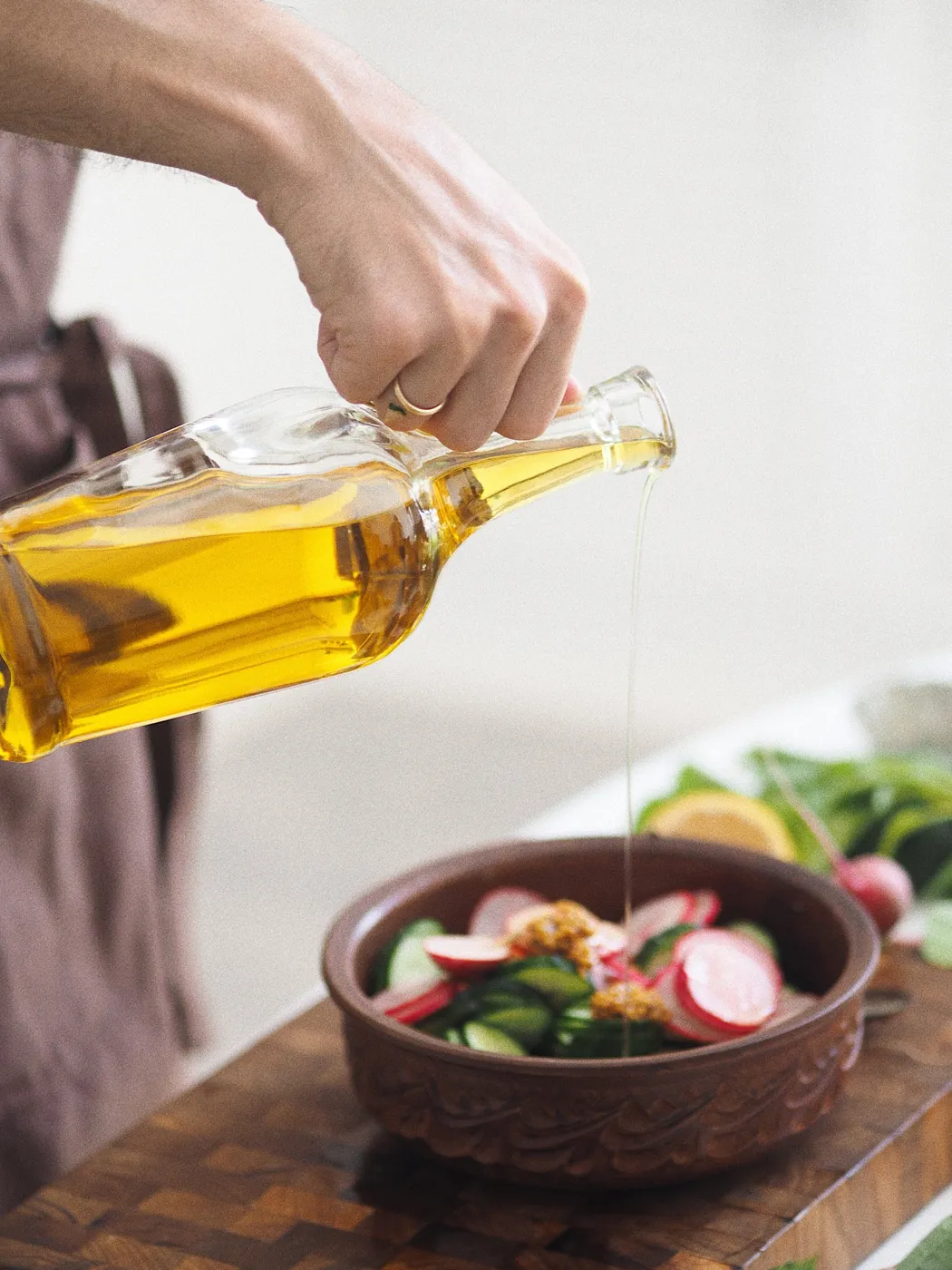
Olive oil being poured into a pan on the stove.A mezze spread of labneh topped with olive oil, olives, dips and toasted bread.Olive oil being poured over a salad of radish and cucumber.

Yes, you can cook and fry with it

206 °Csmoke point measured

In a 2018 study that heated ten common oils, extra virgin olive oil formed the fewest harmful compounds and kept the most antioxidants. Its natural antioxidants protect it while it cooks.

Source: Guillaume and others, Acta Scientific Nutritional Health, 2018.
  • Raw

    Over hummus, labneh, mutabbal and salads, or with warm bread and za'atar.

  • Everyday cooking

    Onions, rice, stews and vegetables. Use it the way you use any cooking oil.

  • Frying

    Eggs, potatoes, falafel and kibbeh. Fry at a steady medium heat, not until it smokes.

  • Baking and preserving

    Fatayer and ka'ak, and to cover labneh balls, makdous and pickled olives in the jar.

Health

The fat your body knows

Olive oil is mostly monounsaturated fat, and extra virgin keeps the natural antioxidants that refining strips out. That is why it sits at the heart of the Mediterranean diet.

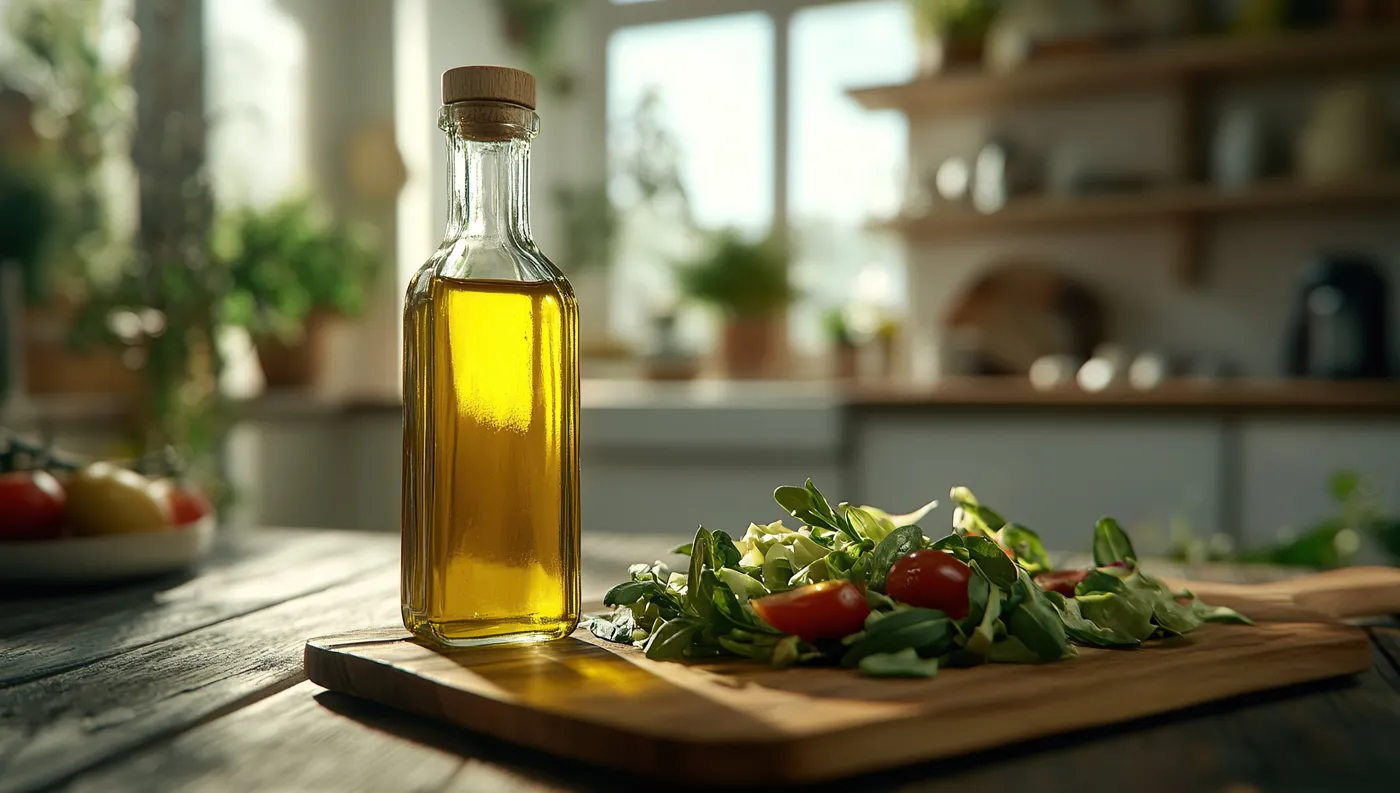
A glass bottle of golden olive oil on a wooden board beside a salad.
  • 55–83%

    Oleic acid

    Most of olive oil is oleic acid, a monounsaturated fat. 55–83% is the range set in the international olive oil standard.

  • 20 g

    About 1.5 tablespoons a day

    Eating this much oil high in oleic acid, in place of saturated fat, may reduce the risk of coronary heart disease. The U.S. FDA calls the evidence supportive but not conclusive.

    Source: U.S. FDA, 2018
  • ≈ 30%

    Fewer heart events

    In PREDIMED, a Spanish study of 7,447 adults, a Mediterranean diet with extra virgin olive oil was linked to about 30% fewer heart attacks, strokes and heart deaths than a reduced-fat diet.

    Source: New England Journal of Medicine, 2018
  • ≈ 7 months

    One tin, one person

    At 20 g a day, one 4.5 L tin lasts one person about 7 months, or a family of four about 7 weeks.

This is general information, not medical advice. If you have a health condition or follow a special diet, ask your doctor.

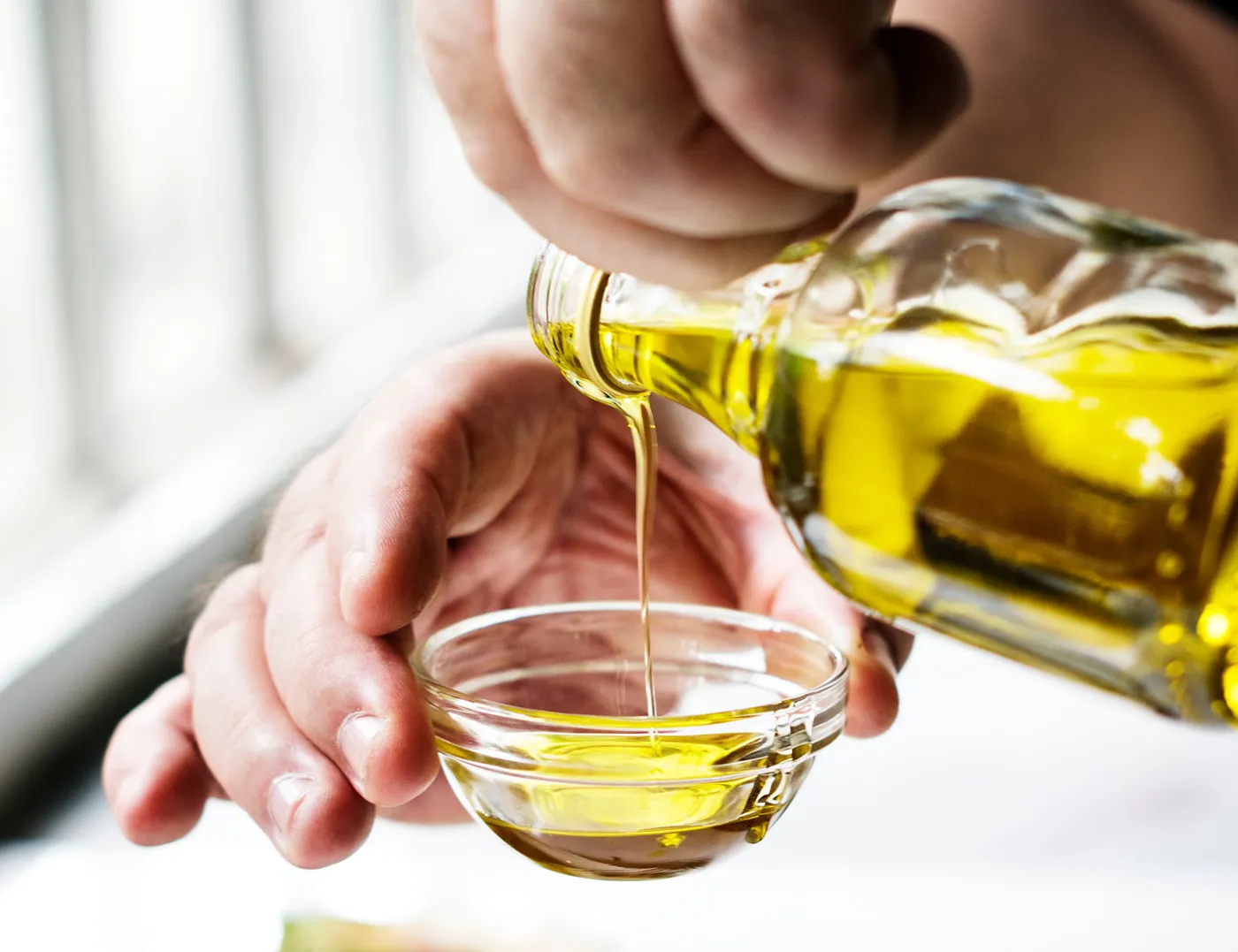
Olive oil poured from a bottle into a small glass bowl held in a hand.

يُوقَدُ مِن شَجَرَةٍ مُّبَٰرَكَةٍ زَيْتُونَةٍ لَّا شَرْقِيَّةٍ وَلَا غَرْبِيَّةٍ

“Lit from a blessed tree, an olive, neither of the east nor of the west.”

The Holy Quran, Surat An-Nur, verse 35
Tradition

The blessed tree, at home

Across the region, olive oil has always been more than food. Families kept a jar by the door as well as by the stove, and passed down its uses from one generation to the next.

  • Hair

    Warm oil massaged into the scalp and ends, left for an hour, then washed out.

  • Hands, heels and elbows

    Rubbed into dry skin at night, especially in winter.

  • Massage

    Warmed and used to massage tired shoulders, backs and legs.

  • A spoon with honey

    A spoon of oil with honey, a home remedy many families give for a scratchy throat.

These are traditional home uses passed down in families, not medical treatments. For any health concern, see a doctor.

FAQ

Questions, answered

Can’t find what you need? Our contact details are at the bottom of the page.

Contact
What is a Roman olive tree?

In Jordan, the oldest olive trees are known as Roman olives. Some are believed to be more than 2,000 years old, and they still bear fruit. Our oil comes from distinguished groves where these trees still stand.

Are the olives picked by hand?

Yes. The olives are picked by hand from the branch, not beaten or shaken down, and sorted by hand to remove bruised fruit, leaves and twigs before milling.

What does cold-pressed mean?

The olive paste is kept below 27 °C while the oil is extracted, the limit set for “cold extraction” in EU olive oil rules. Heat would give more oil but cost aroma and polyphenols.

Can I cook and fry with extra virgin olive oil?

Yes. It holds up well to everyday cooking and frying at a steady medium heat. Its natural antioxidants help protect it while it heats.

How long does a 4.5 L tin last?

At about 1.5 tablespoons (20 g) a day, one tin lasts one person about 7 months, or a family of four about 7 weeks.

Where does the oil come from?

Jordan. It comes from distinguished Jordanian groves with ancient Roman olive trees, and it is produced in Jordan.

How much oil is in the tin?

4.5 liters. It is the only size we sell, so every order is the same tin.

Which payment methods do you accept?

Visa, Mastercard, or cash on delivery. Pay by card and you get an extra 5% off.

How much does delivery cost, and how long does it take?

Delivery is free. Your tin ships from Jordan and arrives door to door in Iraq in 3 days. We call you to confirm before it ships.

Can I see prices in US dollars?

Yes. Prices are shown in Iraqi dinars by default. Switch to $ at the top of the page or in the menu.

What does rain-fed (Ba'li) mean?

The trees are not routinely irrigated. They rely on winter rainfall, the traditional Ba'li way of growing olives.

How should I store it?

Keep the tin tightly closed in a cool, dark place, away from the stove. Pour what you need into a glass jug or bottle for daily use.

Can I send it as a gift?

Yes. Enter the recipient’s delivery details at checkout and add your gift message.

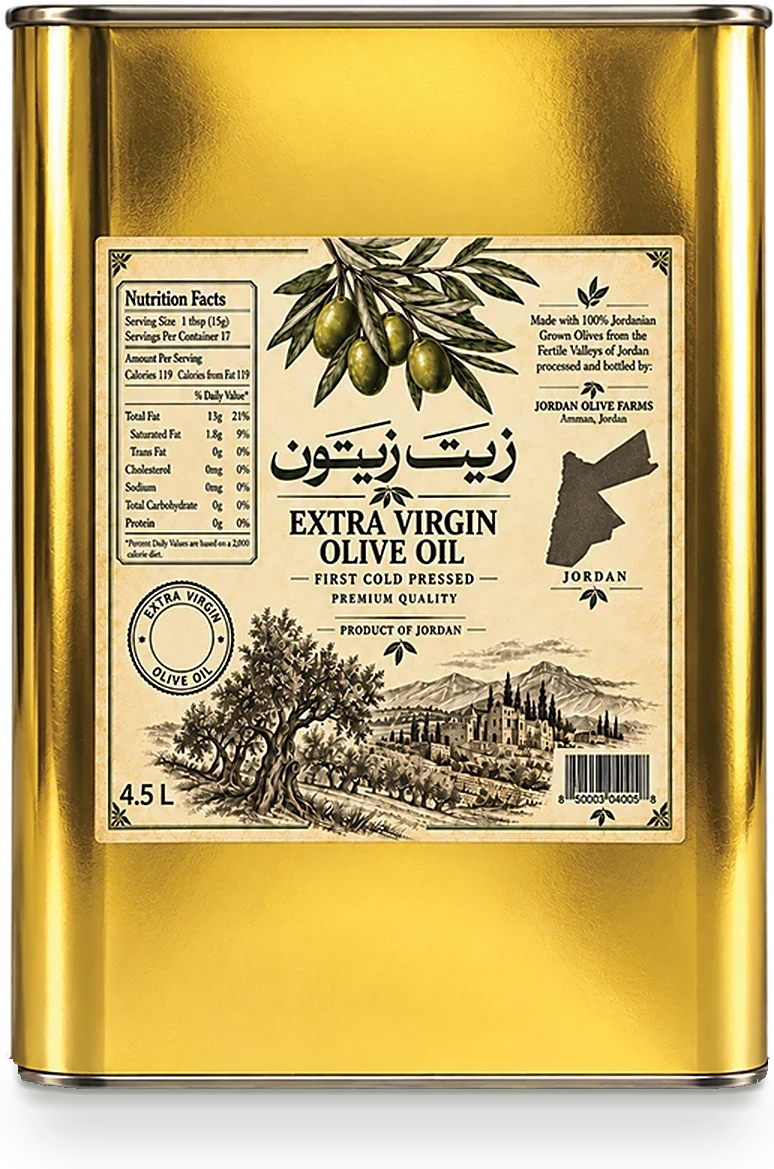
Front of the 4.5‑liter Zayt Zaytoun tin, with its cream label and hand-drawn olive grove.

Bring the Heritage Home.

One 4.5‑liter tin of Jordanian extra virgin olive oil, from rain-fed groves with ancient Roman olive trees.

⁦⁦182,000⁩ IQD⁩⁦⁦304,000⁩ IQD⁩Save 40%

You save ⁦⁦122,000⁩ IQD⁩ on every tin

Pay by card for ⁦⁦172,900⁩ IQD⁩, an extra 5% off.

WhatsApp